

Ever notice sidewalks that turn uneven in a very short time? Those sudden bumps and cracks not only look bad, but they can trip you fast. Sidewalk heaving is when concrete slabs move up or down from their original position. You can often see it in spring. And after winter, repeated freezing and thawing can also nudge the ground out of place, and the slabs follow.
The Safety Problem
Uneven sidewalks can create serious trip hazards for anyone walking by. The average cost of a slip and fall accident runs about $40,000. That is not even counting the legal fees and higher insurance costs afterward. Concrete repairs can often run around $2,500. And when you stack that against sidewalk fixes, the choice starts to make more sense.
Broken or uneven sidewalks can also bring ADA rules into the picture. Those rules expect a flat and safe path for everyone. That means people with disabilities can also move without added risk.
Causes of Sidewalk Heaving
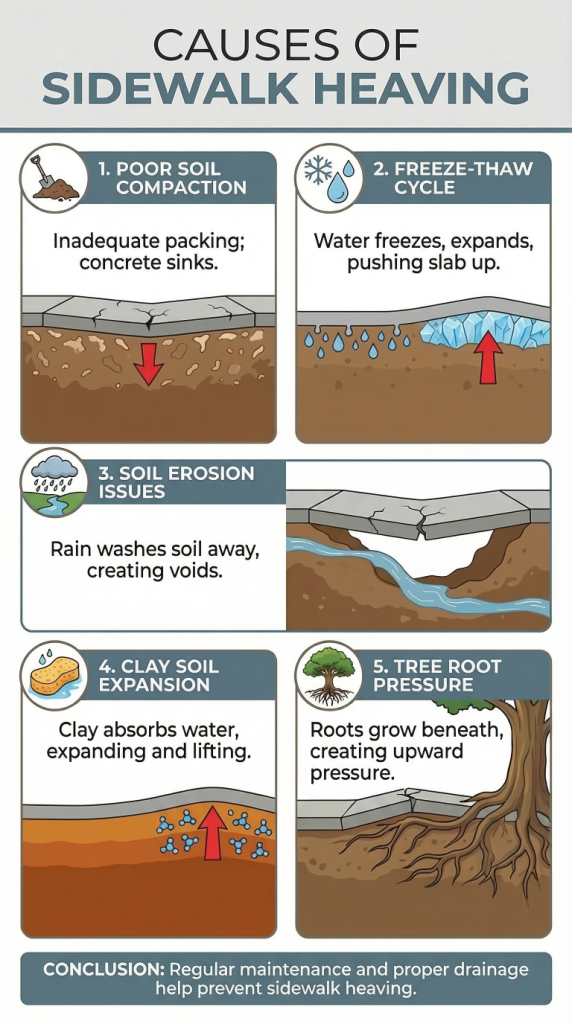
Poor Soil Compaction
One of the biggest reasons sidewalks heave is poor soil prep. Trouble usually follows when contractors don’t pack down the soil properly before pouring concrete. The concrete sits on this loose foundation and eventually sinks under its own weight.
Therefore, soil compaction should be good to provide a stable base for concrete. It helps your concrete hold its shape for years. And if you skip this step, then the soil can sink later, and the slab may crack or tilt.
The Freeze-Thaw Cycle
Water and changing temps can also cause trouble fast. Water gets under the concrete and fills small spaces. When the temps drop, it freezes and expands. The ice needs room, so it pushes up on the concrete.
Then, when the weather warms up, the ice melts, leaving gaps under parts of the slab. These empty spaces mean your sidewalk now lacks support in spots. The concrete cracks and sinks into these new voids. This cycle repeats each season and gets worse over time.
Soil Erosion Issues
Heavy rain or poor drainage can also wash away soil from beneath your concrete slabs. This creates empty pockets underneath. The concrete sinks into these holes and cracks if there is nothing left to support it,
Gutters that dump water right next to your sidewalk make this problem even worse. The constant water flow eats away at your soil foundation bit by bit.
Clay Soil Expansion
Clay soil behaves like a sponge underfoot. It takes in water and expands. And if your sidewalk sits on clay, that expansion can lift the slab. The result is a raised edge that feels small until you trip on it.
Moisture can come from rain, broken pipes, poor drainage, or sprinklers that soak one spot too often. You may never notice the water collecting below. The concrete, though, will show you the outcome once the clay swells.
Tree Root Pressure
Shade trees can look harmless. But their roots can act like slow jacks under your sidewalk. Roots spread out under the concrete and press upward with steady force. As the tree grows, the roots get thicker. That’s when a whole section can lift.
This is a slow problem. It can take years to show. Once you spot the rise, it tends to keep moving. Tree roots are strong, and they keep growing even when concrete is in the way.