
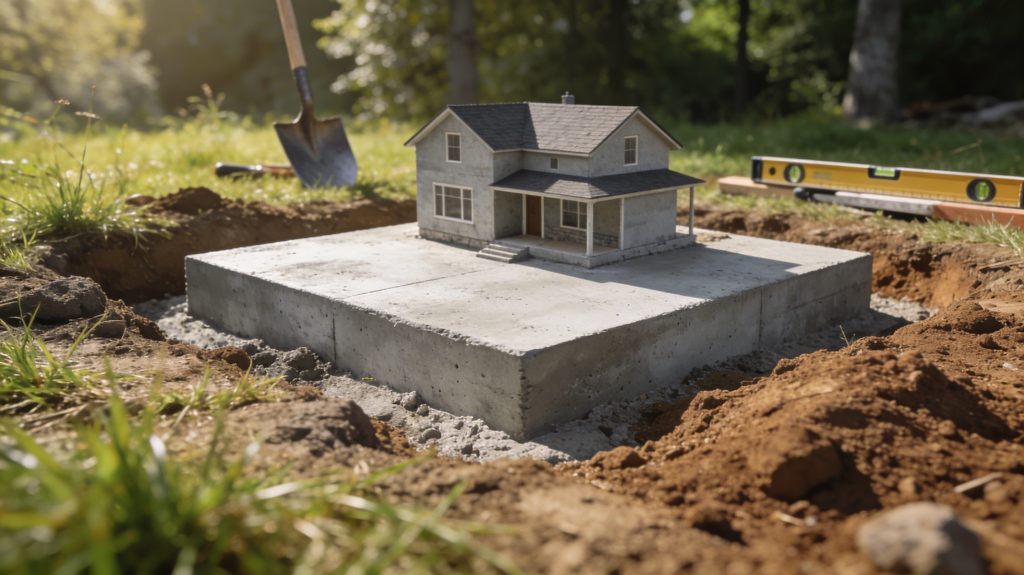
If you are on a house-hunting trip, you might come across homes built on concrete slabs. These foundations are very common in warmer areas where the ground doesn’t freeze much. They’re basically flat concrete pads poured right onto the ground that your house sits on.
Let’s break down what you need to know about concrete slab foundations before you buy or build a house with one.
The Benefits of Concrete Slabs
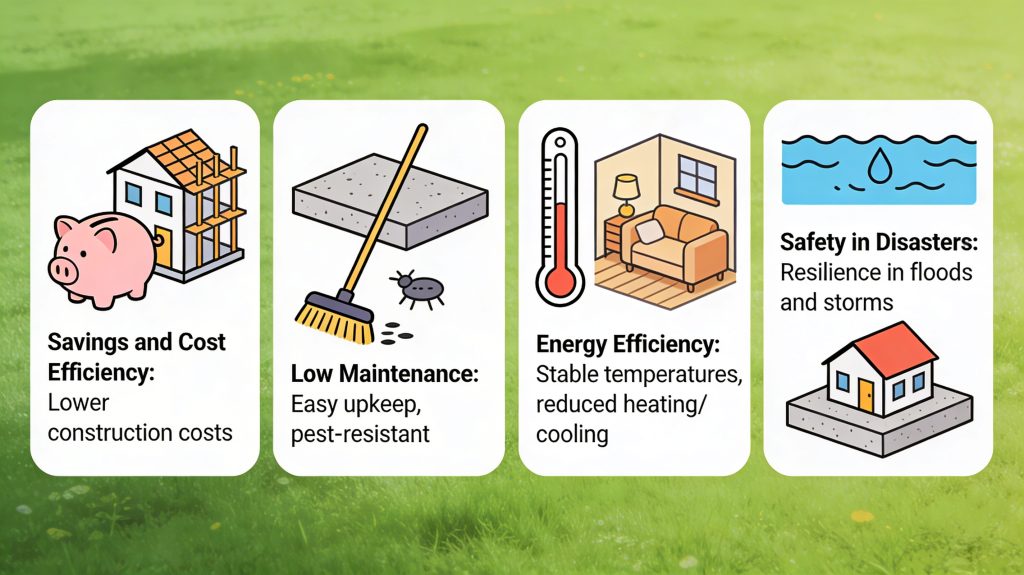
Saves You Money
Concrete slabs usually cost way less than basements or crawl spaces. They need fewer materials and less work to build. And your house gets finished faster, too. The simple design usually means that construction crews can pour the foundation and move on to framing much more quickly.
Less Hassle with Upkeep
There’s no open gap under your house with a slab. And for this reason, pests lose their hiding places fast. Also, termites and mice can’t get in under the floor, which can save you stress later. Also, you skip the crawl-under-the-house routine. There are no tight spaces or flashlight missions. The solid base also helps block moisture from rising into your flooring.
Keeps Energy Bills Lower
Concrete holds heat during the day and then releases it slowly at night. So your indoor temperature stays steadier. That usually means that your AC and heater get a lighter workload. And for this reason, your bills often drop because your system runs less.
Safer in Some Disasters
Slabs often perform better than basements in flood zones. Water can still reach a slab, but it usually causes less hidden damage. And during some earthquakes, a slab can remain steadier because it distributes the weight across a single flat surface.
The Cons About Concrete Slabs
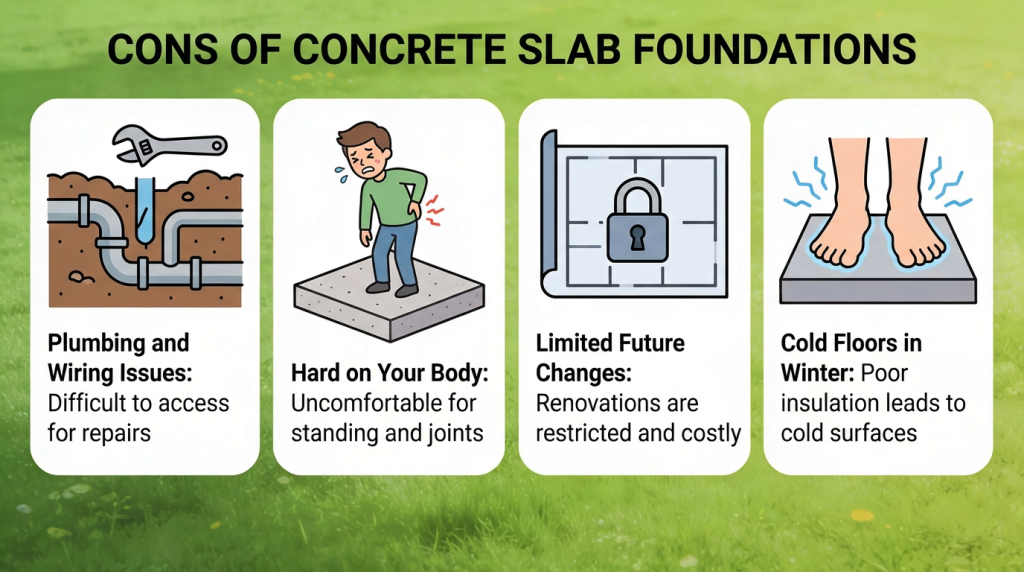
Plumbing and Wiring Nightmares
Your pipes and wires get buried in the concrete before it hardens. When something breaks or needs updating, fixing it becomes a huge pain. Repairs often mean breaking into your floor. This gets messy and costs a bunch.
Hard on Your Body
Concrete feels really hard underfoot. Standing in the kitchen for long periods can hurt your back and knees. Carpet helps a bit, but doesn’t solve the problem completely. This hardness catches many homeowners by surprise after they move in.
Limits Future Changes
This is one of the biggest problems as it limits future changes. If you would like to make some changes later on, you can’t do so without incurring costs. Slab foundations lock you into certain home layouts forever. You can build up but never down. This lack of flexibility bugs many homeowners down the road.
Cold Floors in Winter
Slab floors get chilly in winter and in cooler areas. The concrete touches the cold ground, bringing that chill right to your feet. Area rugs do provide some help. Good insulation, if added during construction, can also make the biggest difference.
Common Problems That Pop Up
Cracks Appear
All concrete eventually cracks. Small hairline cracks are usually very common. But if the cracks are wider, this could signal trouble. They happen because the soil moves beneath the surface or the concrete mix is not right. Once cracks start to form, water usually seeps in, causing further damage.
Water Damage Creeps In
If you skip proper barriers, moisture from the ground moves up through the concrete. It does not rush, but it creeps. And over time, it can ruin flooring, feed mold, and leave a stale smell that never fully goes away. And so good waterproofing during construction blocks that moisture early, so you avoid the mess later.
Uneven Settling Causes Headaches
Soil swells when it gets wet and shrinks as it dries. Those shifts can push parts of your slab down or even tilt it slightly. You may notice doors that start sticking or floors that lean just enough to feel off. Even a small settling can cause problems to spread throughout your home.
Keeping Your Slab in Good Shape
To ensure your slab lasts for a long time, take the following steps.
Direct water away from your home with solid gutters and proper grading. Your yard should slope away from the house. Even a gentle slope works.
Fix small cracks early with masonry sealant. A tiny crack can grow fast if water gets in. For bigger issues, you can call a pro right away.
Control indoor moisture with dehumidifiers in damp areas. You also need to fix leaky pipes fast. Also, watch for signs of excess moisture, such as mold or mildew odors.
Also, plant trees far from your foundation. Tree roots search for water. They can spread under your slab. That can lift parts of the concrete and can lead to more damage.